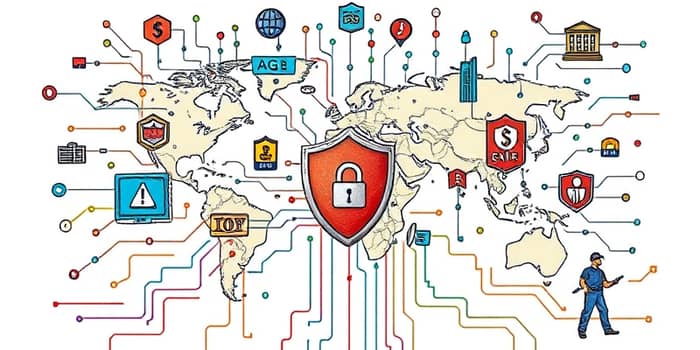
Finance institutions around the world are navigating a rapidly shifting cybersecurity landscape. As digitalization accelerates, regulators are imposing stringent rules to safeguard the integrity of financial systems.
This article provides a comprehensive analysis of the evolving regulatory environment in late 2025, detailing compliance requirements, global perspectives, institution-level impacts, and actionable insights for sustainable cyber resilience.
The financial sector remains a prime target for cyber attacks, with threat actors exploiting vulnerabilities in the wake of accelerated digital transformation. The emergence of digital banking and rapid adoption of cloud and AI has expanded potential attack surfaces.
Regulators recognize the critical importance of cyber resilience to financial stability. In response, authorities are tightening rules, forcing institutions to adopt robust frameworks that can withstand sophisticated threats and protect customer data.
Regulatory bodies across regions are updating or introducing mandates to address increasing cyber risks. Their coordinated efforts reflect a recognition that financial stability hinges on strong cybersecurity.
In the United States, federal agencies including the OCC, Federal Reserve, FDIC, SEC, and FinCEN have aligned on comprehensive information security programs. New SEC rules introduced in 2024 require detailed reporting on operational and cyber risks, while NYDFS’s Part 500 rules mandate multifactor authentication, asset inventories, and annual CISO certifications by November 1, 2025.
Meanwhile, in Europe the Digital Operational Resilience Act (DORA) takes effect in January 2025. This regulation demands robust ICT risk management, resilience testing, and stringent third-party governance and reporting, with significant fines for non-compliance. GDPR continues to underpin data privacy and breach notification standards across EU member states.
In Asia, the Monetary Authority of Singapore enforces comprehensive cybersecurity policies and incident reporting requirements. Non-compliance can lead to hefty fines or suspension of licenses, highlighting regulators’ low tolerance for lapses.
Despite these advances, global harmonization remains limited. Institutions operating across jurisdictions face a complex patchwork of requirements, from California’s CCPA to upcoming state-level updates and cross-border data transfer rules.
All major frameworks share several mandatory elements designed to raise industry-wide standards and ensure prompt response when incidents occur.
Sector-specific mandates vary, but a comparison highlights the breadth of focus and potential penalties:
Institutions must stay ahead of key dates to avoid penalties and operational disruptions. With multiple frameworks in play, timely action is non-negotiable.
Beyond these milestones, institutions should monitor state-level statutory updates and evolving SEC disclosure rules to remain compliant at all levels.
Recent data underscores both the urgency and the scale of regulatory compliance. Fines for GDPR breaches can reach tens of millions of euros, while DORA penalties may similarly climb into multi-million-dollar ranges. More than one-third of global financial firms now outsource core ICT functions, amplifying third-party risk concerns.
Key challenges include regulatory fragmentation and compliance complexity, the rapid integration of AI and fintech, and increased personal accountability for board members. At the same time, regulatory technology—or RegTech—is gaining traction as a way to automate compliance, streamline incident reporting, and manage vendor risk efficiently.
To navigate this complex environment, institutions should adopt a proactive, risk-based strategy that encompasses technology, processes, and people. The following practices can strengthen resilience:
Integrating these measures creates a culture of security and an agile response capability, positioning organizations to not only comply with regulations but also to build stakeholder trust.
The financial sector faces unprecedented cyber challenges, but with clear regulatory imperatives and evolving best practices, institutions can build robust, adaptable defenses. Embracing compliance as a strategic advantage rather than a burdensome obligation empowers firms to safeguard assets, protect customers, and sustain long-term growth.
By staying informed, leveraging RegTech solutions, and fostering a security-focused culture, financial organizations can turn regulatory demands into opportunities for innovation and resilience.
References