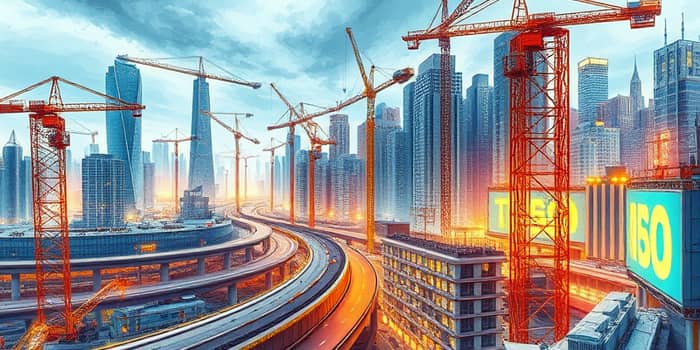
At the dawn of a new economic era, nations are recognizing that robust infrastructure is far more than concrete and steel—it is the very backbone that sustains commerce, connects communities, and ignites prosperity. From highways threading through cities to digital networks spanning continents, strategic investment in critical assets can unlock tremendous value and shape the future of work, trade, and quality of life.
As governments and private sector partners mobilize resources, the evidence is clear: targeted spending on infrastructure catalyzes growth, enhances productivity, and builds resilience against unforeseen challenges. The following analysis delves into the definition, impact, legislative environment, and forward-looking strategies that underscore infrastructure spending as a potent economic engine.
Infrastructure spending encompasses both the construction of new assets and the ongoing maintenance of existing systems. This broad category includes:
Investment flows from federal, state, and local governments, often supplemented by public infrastructure investment generates economic activity through public-private partnerships and private capital commitments. Together, these sources underpin the essential services and facilities that drive commerce, support communities, and ensure national security.
One of the most compelling reasons to prioritize infrastructure spending is the multiplier effect in times of recession. Economists widely agree that each dollar invested can yield more than a dollar in economic output, especially when there is economic slack. A synthesis of global data indicates that:
These gains stem from improved efficiency, reduced congestion, and enhanced productivity. Over the long term, benefits accumulate as upgrades and expansions become fully operational, amplifying the initial investment.
In recent years, landmark legislation has injected unprecedented capital into U.S. infrastructure. The landmark Infrastructure Investment and Jobs Act (IIJA) and the Inflation Reduction Act (IRA) together commit over $550 billion in new federal investments over five years. These funds are allocated across priority areas:
Despite this historic infusion, the American Society of Civil Engineers estimates a total need of $7.4 trillion by 2033 across all infrastructure sectors. Closing this gap requires sustained commitment from all levels of government and private investors.
Rigorous modeling of infrastructure scenarios reveals stark contrasts between sustained investment and retrenchment. Under a continuation scenario aligned with IIJA funding levels, projections include:
By contrast, a snapback to pre-IIJA spending would create a shortfall of $3.7 trillion by 2033 and erode household benefits by nearly $2,700 per year due to increased travel times, outages, and repair costs.
Transportation alone accounts for 47% of American household expenses related to mobility. Upgrading transit and highway infrastructure not only shortens commutes but also expands economic opportunities in underserved regions. Modernizing the power grid and water delivery systems prevents costly outages and contamination, while broadband expansion fosters digital equity and global competitiveness.
Worldwide infrastructure requirements approach $106 trillion through 2040, with many nations ramping up capital spending to secure supply chains and support emerging industries. In comparison, U.S. public infrastructure investment has declined to just 2.32% of GDP, well below historical norms and peers such as Germany, Japan, and South Korea.
Restoring investment to at least historic averages is critical for long-term competitiveness in a global economy. Robust infrastructure underpins export capacity, shields against supply chain disruptions, and anchors manufacturing and innovation hubs on home soil.
Financing mechanisms shape the effectiveness of infrastructure spending. Borrowing can accelerate project delivery but risks crowding out private investment if interest costs rise. Nevertheless, studies show that every federal dollar spent stimulates roughly $0.60 in additional state and local infrastructure outlays, leading to a compounding effect on capital formation.
Over a decade, sustained spending of $200 billion per year can lift the public capital stock by 2.6%, a modest annual increase with profound cumulative effects. With improved asset management and performance metrics, these investments can pay for themselves through productivity gains, higher tax revenues, and lower maintenance costs.
Not all infrastructure dollars yield equal returns. Project quality, procurement methods, and timing relative to the economic cycle influence outcomes. Quick-start stimulus may offer smaller short-term boosts if implementation is delayed or projects simply replace other capital spending.
Decision-makers must guard against wasteful borrowing and low-impact initiatives—sometimes derisively termed “bridges to nowhere.” Prioritizing high-value, multi-modal projects with strong economic multipliers ensures resources are channeled toward initiatives that deliver measurable benefits.
Building in resilience through adaptive design and regular maintenance is equally vital. Infrastructure that can withstand climate events, cyber threats, and shifting population patterns safeguards long-term utility and cost-effectiveness, enabling economic resilience against future shocks.
Infrastructure spending is far more than fiscal stimulus; it is an investment in the nation’s future, shaping every dimension of daily life—from the roads we travel to the digital pathways that connect our communities. By sustaining and expanding these commitments, policymakers can unlock unprecedented levels of productivity, bolster household budgets, and secure national competitiveness for decades.
As global peers accelerate their own infrastructure agendas, the United States stands at a crossroads. Seizing this moment with purpose-built strategies, transparent governance, and collaborative funding models can transform aging assets into durable engines of growth. Through decisive action and targeted investment, infrastructure can fulfill its promise as the ultimate economic catalyst.
References