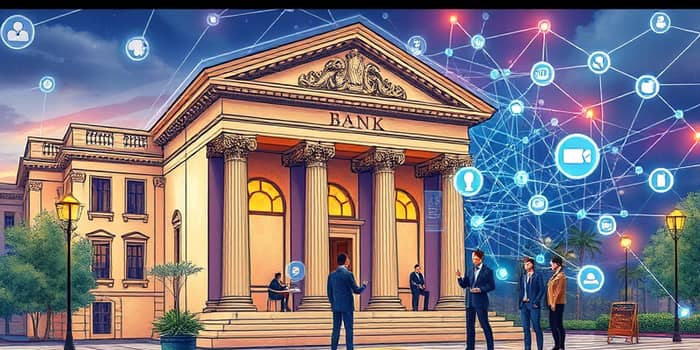
Financial institutions face growing pressure to adapt to rapidly evolving customer expectations, regulatory demands, and technological innovations. Legacy systems, often decades old, can no longer support the agility and efficiency required for competitive advantage. This roadmap outlines a clear, step-by-step approach to modernizing core platforms while minimizing risk and maximizing business value.
Traditional banks and credit unions still rely on outdated core systems that consume vast amounts of resources. Studies show that legacy systems consume up to 70% of IT budgets on maintenance alone, squeezing funds available for innovation. Institutions that delay action face escalating costs: data breach expenses average $4.45 million per incident, and IDC projects over $57 billion in cumulative losses by 2028 for those that remain stagnant.
Moreover, more than 80% of digital transformation efforts in finance fail, largely due to underestimating complexity and overlooking cultural dynamics. A strategic, risk-managed approach is crucial to avoid these pitfalls and to unlock benefits such as real-time processing, automated workflows, and enhanced customer experiences.
Modernization delivers transformative operational efficiencies and cost reductions. Real-world examples demonstrate that moving to cloud-native platforms can cut IT spend by nearly one-third, while reducing energy consumption and maintenance overhead. Automated real-time transaction processing and AI-driven fraud detection improve service quality and reduce error rates.
Institutions also gain a stronger security posture and simplified compliance. Modern architectures provide built-in controls, automated reporting, and robust data governance, mitigating risk and ensuring adherence to stringent regulations. Increased agility enables faster product launches and integration with fintech partners, boosting customer satisfaction by as much as 25%.
Successful modernization requires proactive risk mitigation. By capturing institutional knowledge, engaging stakeholders early, and preserving critical legacy functions during transition, organizations can maintain business continuity throughout the program.
This multi-pronged strategy ensures incremental value delivery and reduced transformation risk. Early focus on customer-facing applications builds momentum, while hybrid integration safeguards core operations until full cutover.
The modernization journey unfolds in four distinct phases:
Assessment & Planning: Conduct a comprehensive audit of existing systems, map dependencies, and quantify operational impact. Secure executive sponsorship and align goals with business strategy.
Prioritization: Identify quick-win initiatives focused on compliance, customer value, or cost avoidance. Balance innovation objectives with risk tolerance and resource availability.
Execution: Adopt agile methodologies for iterative development. Pilot new modules, validate performance, and gradually shift workloads. This stepwise approach prevents service disruptions and builds stakeholder confidence.
Integration & Optimization: Deploy API-driven integration layers to maintain interoperability. Monitor key performance indicators, refine architectures, and decommission obsolete components as capacity allows. Continuous feedback loops ensure ongoing improvement.
By tracking these benchmarks, institutions can measure progress and justify continued investment. Incident cost avoidance, particularly in cybersecurity, further bolsters the business case.
Several modern technologies serve as catalysts for transformation:
Cloud Computing delivers elasticity and reduced capital expenditure. APIs and Open Banking unlock ecosystems and fintech partnerships. AI-driven Analytics empower fraud detection, compliance monitoring, and personalized services. Automated Workflows streamline back-office tasks and improve accuracy.
BBVA Compass invested €2.4 billion in a decade-long modernization, emerging as a digital leader despite navigating cultural obstacles and technical complexity. Zions Bancorporation’s $200 million core upgrade highlights the resource scale required for large institutions. Clients of Avato’s hybrid integration platform report:
These examples prove that with disciplined execution and strong governance, even the most entrenched legacy environments can be transformed into agile, innovation-ready platforms.
The institutions that modernize promptly and strategically will enjoy enhanced profitability and customer loyalty as the financial landscape shifts toward digital-native competitors. Legacy system modernization is not a one-time project but an ongoing cycle of innovation, optimization, and growth. By following this roadmap, financial organizations can achieve sustained leadership and resilience in an increasingly competitive marketplace.
References