In recent decades, the world has witnessed political movements that promise immediate relief to citizens by challenging established elites. This form of governance—economic populism—has profound implications for national economies, often trading long-term stability for short-lived gains.
Understanding the balance between urgent social needs and sustainable fiscal discipline is critical. Without a clear grasp of the mechanisms, history, and consequences of populist economic strategies, societies risk repeating cycles of boom and bust.
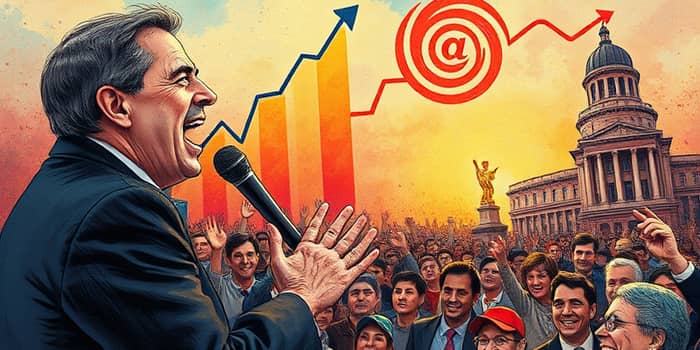
At its core, economic populism prioritizes immediate benefits to lower and middle classes, frequently financed through rapid expansions in spending. Politicians invoke a narrative of the people against the elites, often undermining independent institutions like central banks.
This approach distrusts checks and balances, favoring short-term domestic gains over stability. The outcome is typically a sequence of rising deficits, inflationary pressures, and eventual austerity measures.
The term 'populism' emerged in the late 19th century with the U.S. People’s Party advocating to abandon the gold standard. Meanwhile, Russian agrarian activists also adopted similar rhetoric, emphasizing state-driven inflation to relieve debt burdens.
Throughout the 20th century, Latin America exemplified recurrent cycles: public spending booms under Peronist Argentina, followed by hyperinflation and IMF bailouts. Later, Venezuela’s oil-funded welfare and currency printing under Chávez and Maduro led to one of the most severe economic collapses in modern history.
Populist governments employ a variety of tools to deliver on promises, yet these instruments often sow the seeds of future crises:
In the immediate aftermath of populist measures, nations often experience a surge in growth and employment. Public works projects, tax reductions, and welfare programs can lift output temporarily and generate widespread support.
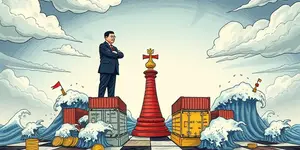
For example, Mexico’s 2018 decision to cancel its New International Airport (a $13 billion project) led to an immediate dip in the peso and reduced investment, purely on the basis of political signaling. Yet this shock illustrated how quickly markets respond to perceived policy risk.
However, these short-lived achievements give way to systemic problems:
Developing nations often suffer pronounced boom-and-bust cycles, frequently requiring IMF intervention to stabilize finances. In contrast, advanced economies have less frequent large-scale populism but face similar risks: rising debt levels, weakened institutions, and fractured global ties.
Protectionist trends—such as U.S. tariffs, Brexit, and European right-wing parties—have slowed trade integration. Reduced openness threatens long-term growth by limiting competition and innovation.
Critics argue that populist economic policies endanger stability by prioritizing electoral gains over sustainable frameworks. They stress the importance of independent central banks and credible fiscal rules.
Conversely, some policymakers defend expansive welfare and redistribution as essential to address inequality and social justice. They caution against dismissing all anti-austerity measures as mere populism, noting that well-designed social programs can enhance productivity and cohesion.
Effective economic policy must strike a balance: satisfying immediate social needs while safeguarding long-term stability. Governments benefit from prudent fiscal management and strong institutions that can deliver support without compromising future growth.
Ultimately, societies thrive when leaders resist the allure of easy fixes and build resilient frameworks, ensuring that the promise of prosperity endures beyond electoral cycles.
References