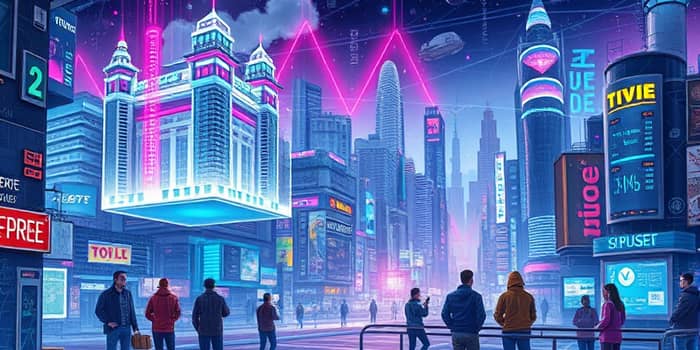
The emergence of a new digital frontier has ushered in transformative opportunities for commerce, creativity, and connection. At its core, the metaverse represents an ecosystem where immersive technologies converge to reshape how we live, work, and play. As global markets pivot toward this virtual domain, the economic structures that underpin it are evolving into dynamic, decentralized models that reward innovation and participation.
The metaverse can be understood as a persistent, immersive, and interoperable virtual environment that spans gaming, entertainment, education, retail, finance, and real estate. It seamlessly blurs boundaries between the physical and digital spheres, enabling new forms of social interaction, commerce, and work. Digital assets—ranging from non-fungible tokens (NFTs) to avatars, virtual real estate, digital fashion, and in-world currencies—are the lifeblood of this economy, underpinning ownership, trade, and monetization across platforms.
Analysts forecast explosive growth in the metaverse market over the next decade. Estimates vary due to differing methodologies, but consensus points toward a multi-trillion-dollar opportunity. As infrastructure matures and adoption accelerates, regional dynamics will shape market leadership and growth trajectories.
North America currently commands the largest share of this market, while Asia-Pacific is the fastest-growing region, driven by a robust gaming and digital innovation ecosystem. By 2030, the metaverse could engage billions of users and create trillions in value worldwide.
Digital assets form the backbone of metaverse economies, enabling true ownership and creative expression. Their value proposition lies in provable scarcity, interoperability, and community-driven ecosystems.
The broader virtual asset market is expected to surpass $100 billion by 2027, as speculation, scarcity, and utility drive demand. Decentralized exchanges, smart contracts, and blockchain networks support secure trading and cross-platform interoperability.
From healthcare to finance, the metaverse is unlocking novel experiences and efficiencies that extend beyond entertainment.
Each sector is discovering unique value propositions in the metaverse, driving innovation and new revenue streams.
Emerging economic paradigms are redefining how brands, creators, and users interact within virtual environments. Key models include:
Ownership Economy: Blockchain and NFTs establish verifiable ownership for digital assets, enabling peer-to-peer trading and royalty streams across platforms. Fee-based use of virtual infrastructure supports platform operators, while creators monetize access to their worlds and tools.
Experience Economy: Monetization through immersive games, virtual events, branded content, and interactive learning. Users pay for compelling, shareable experiences that transcend traditional media.
Direct-to-Avatar (D2A): Brands engage directly with digital identities, selling virtual goods and wearables that bypass conventional e-commerce channels. This model fosters deeper community connections and recurring revenue.
Several core technologies power the metaverse’s rapid evolution:
Interoperability remains an aspirational goal, with efforts underway to standardize asset formats and identity protocols. Rapid advancements in AI, blockchain, and immersive hardware will be crucial to achieving seamless cross-platform mobility.
As the metaverse matures, its contribution to global economic output will become substantial. Estimates suggest:
By 2030, metaverse-driven GDP could rise by 2.8%, equating to trillions in value. McKinsey projects up to $5 trillion in value creation within the next decade. Job creation is robust, with over one million professionals currently employed in metaverse-related roles and 121,000 new positions added last year.
Companies worldwide—over 26,000 at last count—are participating in the metaverse revolution, filing patents, developing IP, and forging partnerships that will define the next era of digital innovation.
Despite promising prospects, significant barriers must be addressed to realize the metaverse’s full potential. Technical hurdles around scaling interoperability and establishing cross-platform standards remain formidable. Regulatory frameworks for digital ownership, consumer protection, and financial compliance are still underdeveloped.
Security and data privacy concerns are paramount, as virtual environments become targets for hacking, identity theft, and unauthorized data mining. Moreover, valuation volatility in crypto tokens and NFTs poses risks for investors and participants, underscoring the need for robust risk management and transparent marketplaces.
By 2030, mainstream adoption of the metaverse is anticipated, engaging billions of users and reshaping how industries operate. The metaverse represents not just an extension of the internet, but a fundamental shift in economic, cultural, and social paradigms. Continuous innovation in AI, blockchain, immersive hardware, and interoperability standards will accelerate growth.
As we stand at the cusp of this digital revolution, stakeholders—from entrepreneurs and developers to policymakers and consumers—must collaborate to foster sustainable, inclusive growth. The metaverse economy holds the promise of unprecedented creativity, value creation, and global connectivity. By embracing these new paradigms for digital assets, we can build richer, more accessible virtual worlds that empower everyone to participate in the next frontier of human experience.
References