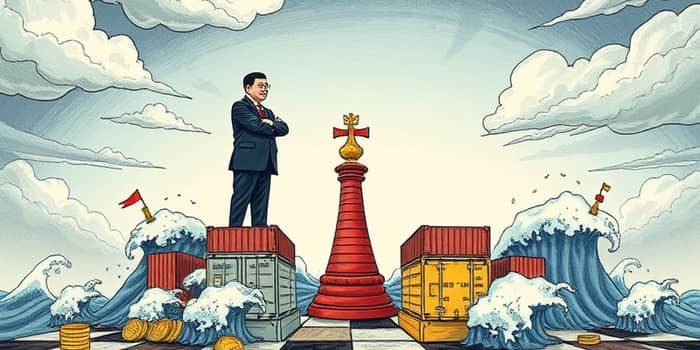
Trade wars reshape economies and alter the course of history, pitting nations against one another in a contest of tariffs, quotas, and political leverage. This article explores their inner workings, motivations, impacts, and the debates that surround them.
A trade war emerges when two or more countries engage in economic conflict and retaliation through barriers that restrict cross-border commerce. These measures aim to protect domestic interests or leverage political gains, often with far-reaching consequences.
The primary instruments of trade warfare include the following mechanisms:
Trade wars rarely spring from pure economic necessity. Instead, they reflect broader ambitions or anxieties, as political leaders wield economic tools as instruments of statecraft.
Key drivers include:
From the Great Depression to modern strategic rivalries, trade wars have repeatedly altered global trajectories. Three landmark cases illustrate their scale and impact.
Higher consumer prices and disrupted supply chains often mark the immediate consequences. Tariffs on staples like steel or electronics translate directly into costlier products for households and firms.
Uncertainty spikes as businesses scramble to adjust sourcing strategies, delaying investment and hiring decisions. Retaliatory measures intensify volatility, making planning across borders a high-wire act.
Over the longer term, trade wars can trigger structural shifts. Industries shielded by barriers may gain, but they risk inefficiency and stagnation without competitive pressure. Meanwhile, export-focused firms suffer declining market shares, and consumers face reduced choice and higher inflation.
Historical evidence shows that prolonged trade conflicts often depress global growth, prompt regional realignments, and fuel inflationary pressures that erode living standards across income levels.
The World Trade Organization (WTO) provides a forum for dispute resolution and rule enforcement, but its mechanisms have struggled under pressure from major powers. Complaints and counter-complaints often clog its appellate process, delaying remedies and undermining credibility.
In parallel, nations craft alternative pacts to circumvent barriers. Agreements like the Comprehensive and Progressive Agreement for Trans-Pacific Partnership (CPTPP) or the Regional Comprehensive Economic Partnership (RCEP) illustrate efforts to preserve open markets within new blocs.
Trade wars create winners and losers beyond simple exporters versus importers. Politicians may curry favor with protected industries, while broader electorates grapple with higher living costs. The resulting coalitions influence policy continuity or reversal.
Economies engaging in beggar-thy-neighbor tactics often ignite tit-for-tat escalations. These dynamics echo Adam Smith’s warning about self-defeating mercantilism, as each round of retaliation chips away at mutual welfare.
Diplomatic negotiations remain the primary path to de-escalation. Compromise packages typically involve phased tariff rollbacks, legal guarantees on intellectual property, and monitoring commitments.
Executive orders can reverse barriers swiftly, but political backlashes and lobby pressures often delay or dilute reforms. International mediation forums offer neutral grounds, yet their influence hinges on member cooperation and mutual trust.
Today’s trade conflicts increasingly target high-tech industries such as semiconductors, artificial intelligence, and telecommunications. Export controls, investment screening, and cybersecurity regulations form a new arsenal in economic statecraft.
These measures reflect rising technological nationalism, as states fear dependency on foreign innovation for critical applications. The result is a delicate balance between fostering global collaboration and safeguarding national interests.
Scholars remain divided on whether trade wars achieve enduring gains. While they may secure narrow political victories or protect key sectors, most agree the aggregate welfare loss often outweighs these benefits.
The broader globalization backlash and calls for strategic decoupling underscore shifting public sentiments. As the U.S.-China rivalry intensifies, trade policy has merged with geopolitical competition, raising questions about the future of interconnected markets.
Ultimately, the political economy of trade wars underscores the tension between national ambitions and collective prosperity. Navigating this landscape demands nuanced policy choices, sustained dialogue, and a willingness to reconcile short-term gains with long-term stability.
References