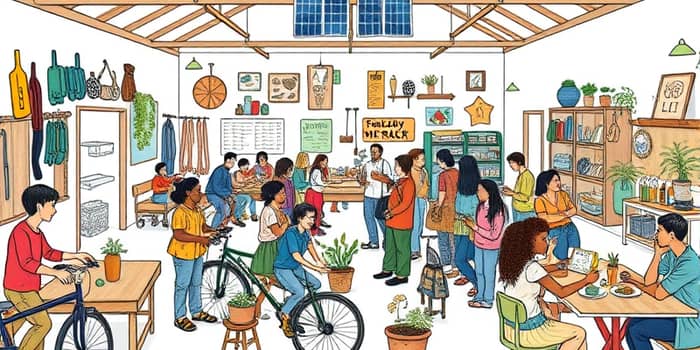
The sharing economy is transcending its early chapters of ride-hailing and home rentals. Today, it’s a dynamic landscape of skills, tools, energy and community exchange.
Originally coined to describe platforms that let individuals rent cars or spare rooms, the sharing economy has grown into a broad ecosystem. At its core is peer-to-peer collaboration, leveraging digital platforms to connect people who need resources with those who have them.
This model moves away from vertical, ownership-focused transactions toward horizontal, asset-light approaches. It thrives on circular consumption models, optimizing underused assets and building networks of trust.
The sector’s expansion has been propelled by high-speed internet, mobile apps and seamless payments. In 2014, it was valued at about $14 billion. By 2025, estimates range from $201 billion to $335 billion, and analysts predict it will soar to $1.33 trillion by 2034.
Traditional giants like Airbnb and Uber still dominate rooms and rides, but rapid growth is occurring in emerging verticals as consumers seek variety, sustainability and community impact.
Innovators are tapping fresh segments to broaden sharing’s appeal. What started with cars and homes now spans a kaleidoscope of offerings:
Each niche fosters micro-communities, enabling individuals to monetize idle assets and talents through digital matchmaking.
Advanced technologies power the next wave. AI-driven recommendations and dynamic pricing algorithms optimize matches between supply and demand. Blockchain pilots offer transparent transaction records, boosting trust. Mobile apps ensure seamless, on-the-go access to services.
Millennials and Gen Z lead demand, valuing experiences, flexibility and eco-conscious consumption. Urban professionals share tools to save costs, while students tutor peers for extra income—driven by economic pressures and a desire for community.
City planners are redesigning streets and zoning laws to support co-living, co-working and micro-logistics hubs. Partnerships between automakers and car-sharing operators are retrofitting fleets for on-demand use.
However, municipalities wrestle with zoning codes, parking regulations and taxation. A balanced policy approach can unlock public benefits while safeguarding worker rights and local businesses.
The gig-based workforce raises questions about job security, benefits and classification. Critics ask whether these platforms truly empower workers or shift risk onto individuals. Data privacy and platform monopolies are cited as potential threats to fairness.
Moreover, some argue that platform rentals are simply disguised marketplaces, not genuine sharing. The debate centers on whether monetary incentives dilute communal values.
The future of sharing is hyperlocal, personalized and sustainability-driven. Expect platforms to adapt services to individual lifestyles—offering curated subscriptions and neighborhood-based reach.
As the sharing economy matures, it promises to reshape how we consume, work and connect. Beyond rides and rooms lies a vast tapestry of community-driven exchange.
By embracing innovation, prioritizing sustainability and advocating fair regulation, we can cultivate a truly collaborative economy—one where access, trust and shared prosperity prevail.
References